




Sinister Wisdom Newsletter
Login (ONLY for SW staff)


An Idiosyncratic History of the Round Sinister Wisdom Logo
by Julie R. Enszer
View previous newsletters and subscribe to the Sinister Snapshot!
Early in my tenure as editor of Sinister Wisdom, someone emailed me (and I apologize, I cannot recall who for the life of me! If it was you, please tell me! Upon further thought I believe it might have been Maggie Jochild, now of blessed memory) and encouraged me to restore the “Sinister Wisdom logo.” I had to ask my interlocutor what exactly she meant. What logo? She replied, the round one! Ah! I went back to early issues of the journal and found it.
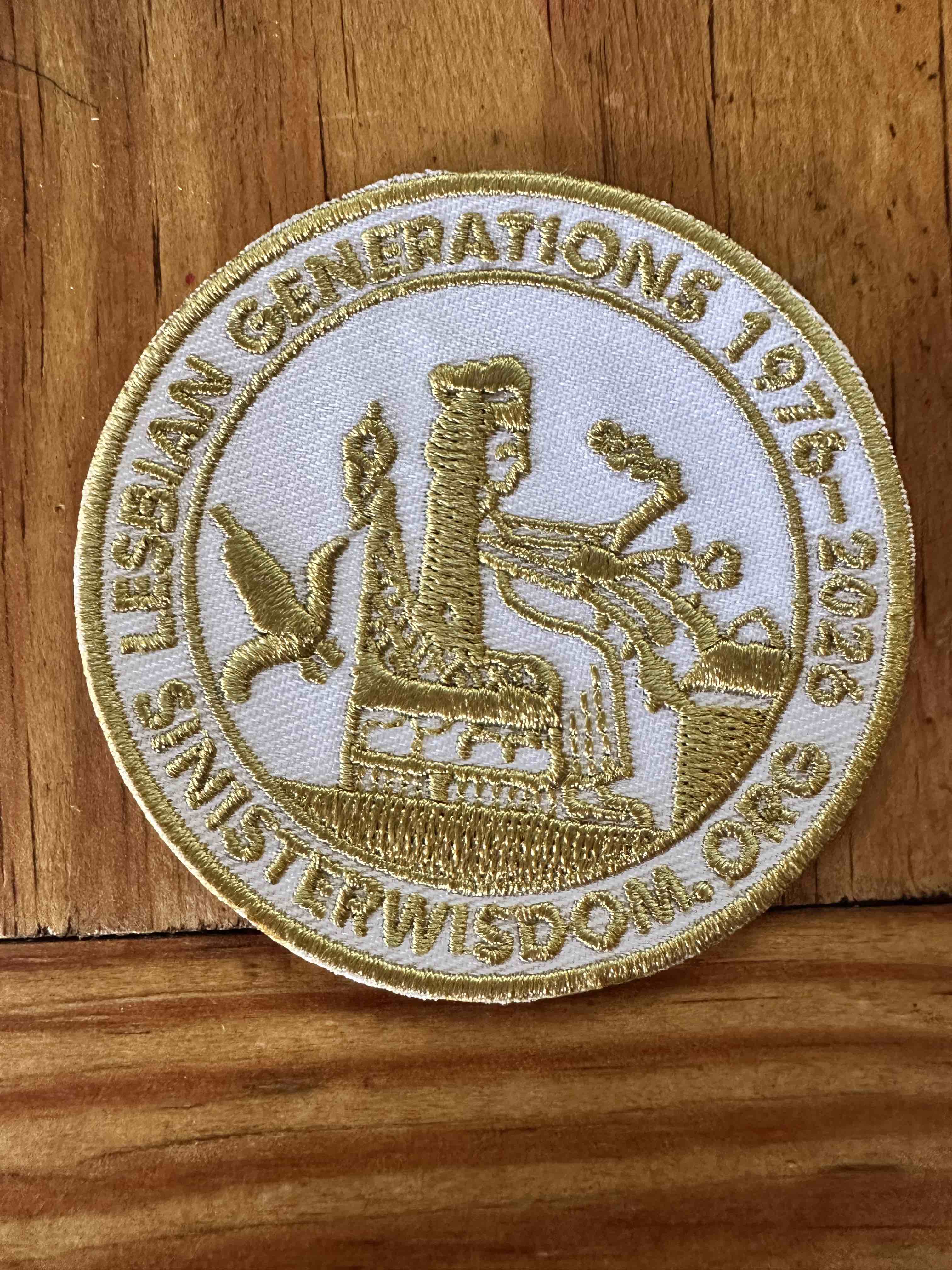
When I took the reins of Sinister Wisdom, I received some paper files and some electronic files, but this round logo was not among them. I scanned a few versions of it that had been printed in early issues (this was before we had the entire archive of Sinister Wisdom online and available for free) and then emailed it to our designer asking if she could clean it up and make it useable for future projects. She did and now we regular use this round logo in Sinister Wisdom materials.
On the occasion of our fiftieth anniversary, I share the genesis of this logo because it connects not only to Sinister Wisdom’s history but also to an important lesbian of yore.
In Sinister Wisdom 16, Harriet and Catherine wrote “A Domestic History” about the first five years of Sinister Wisdom. Catherine Nicholson explained in this article, “The logo comes from Jane Ellen Harrison’s Prologomena to the Study of Greek Religion (p. 275), a Boeotian plate painting of the Corn-goddess (Demeter and Persephone in one figure) which Catherine feels graphically represents the title.”
Catherine was a scholar, and I suspect owned a copy of Harrison’s book. I have encountered some stories about Jane Ellen Harrison, but I had to look up this particular book, which is freely available at the Internet Archive. This passage is where Harrison explains the Boeotian plate image:
“On the Boeotian plate* in fig. 66 is figured the Corn-goddess, but whether as Mother or Maid it is difficult, I incline to think impossible, to decide. She is a great goddess, enthroned and heavily draped, wearing a high polos on her head. She holds ears of corn, a pomegranate, a torch; before her is an omphalos- like altar, on it what looks like a pomegranate—is she Demeter or Persephone? I incline to think she is both in one; the artist has not differentiated her.”
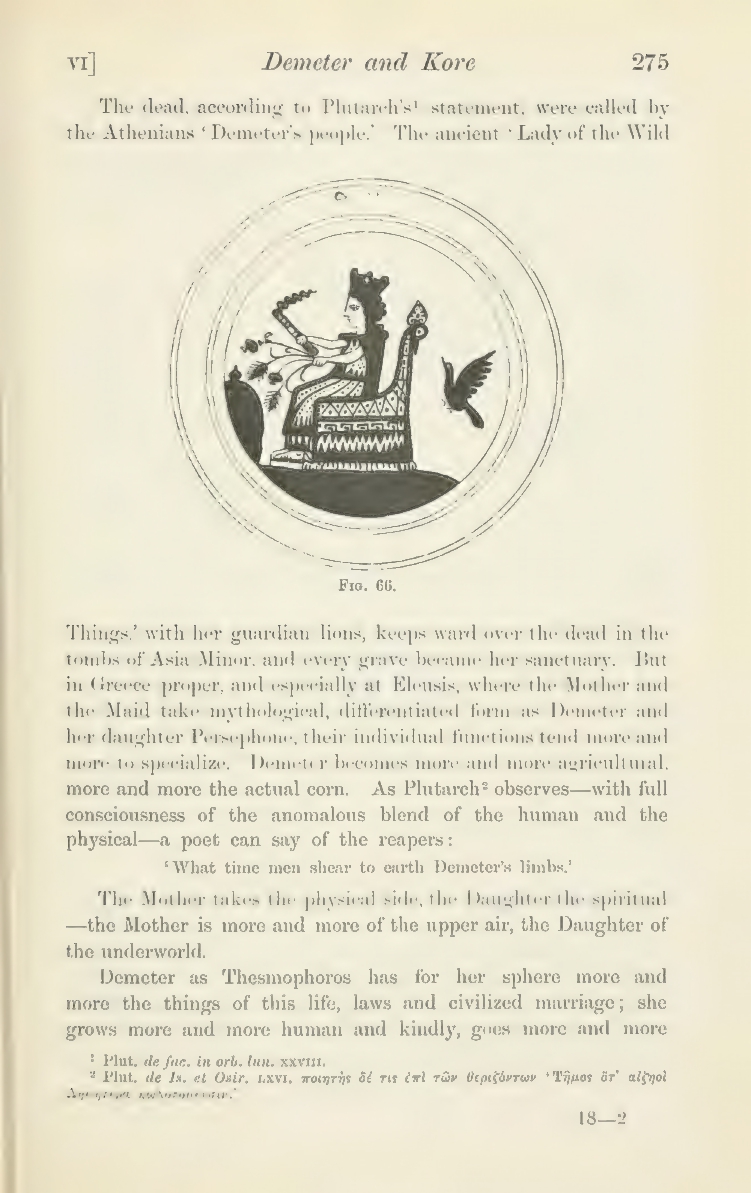
Harrison continues with a long exegesis of the image explaining that in Greece, “the Mother and the Maid take mythological, differentiated form as Demeter and her daughter Persephone, their individual functions tend more and more to specialize. . . . The mother takes the physical side, the Daughter the spiritual—the Mother is more and more of the upper air, the Daughter of the underworld.”
Harrison concludes reflecting on this image (which becomes the Sinister Wisdom round logo):
“At first we have merely the figures of the Two Goddesses, the Two Thesmophoroi, the Two Despoinae. Demeter at Hermione is Chthonia, in Arcadia she is at once Erinys and Lousia. But it is not surprising that, as will later be seen, a religion like Orphism, which concerned itself with the abnegation of this world and the life of the soul hereafter, laid hold rather of the figure of the underworld Kore, and left the prosperous, genial Corn-Mother to make her way alone into Olympus.”
From Jane Ellen Harrison, a scholar of ancient Greece and a linguist, who made her life with the poet Hope Mirlees in Paris, Catherine Nicholson adopted the round logo for Sinister Wisdom. What an extraordinary lineage. I am grateful for the person who told me sixteen years ago to seek this round logo and to Catherine Nicholson for opening this portal into the lesbian past.
Julie R. Enszer is the editor of Sinister Wisdom.
Continue reading the Featurette on the Sinister Wisdom Blog!
"Empowerment comes from ideas."
― Charlene Carruthers
"Your silence will not protect you."
— Tourmaline
"Gender is the poetry each of us makes out of the language we are taught."
— Leila Raven
Add new comment