






Sinister Wisdom Newsletter
Login (ONLY for SW staff)


Review of Queer Modernism: 1900–1950 edited by Susanne Gaensheimer, Isabella Malz, and Anke Kempkes
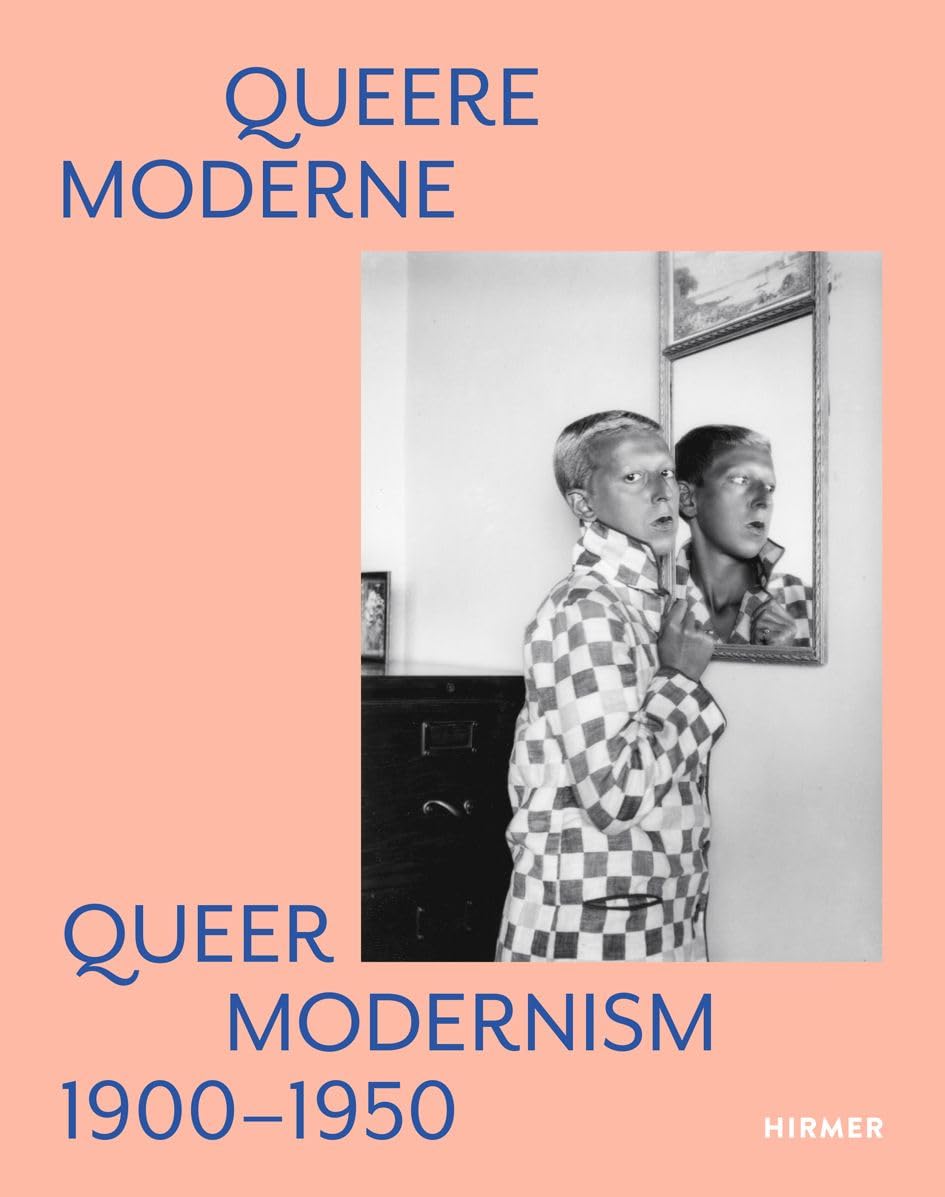
Queer Modernism: 1900–1950
Edited by Susanne Gaensheimer, Isabella Malz, and Anke Kempkes
Hirmer Publishers, 2026, 336 pages
$55.00
Reviewed by Angela Acosta
Queer Modernism: 1900–1950 is a visually engaging and academically rigorous exhibition catalogue for the titular exhibition at the K20 Kunstsammlung Nordrhein-Westfalen, a premier modern art museum in Düsseldorf, Germany. The book showcases over one hundred works across artistic media, literature, and archival materials from queer artists with the aim of reasserting the connection between queer perspectives and the development of European modernist movements. The first exhibition of its kind, Queer Modernism: 1900–1950 represents the culmination of curatorial and archival work to place “desire, gender, and sexuality, as well as the politics of self-representation, at the center of [queer artists’] artistic practice” (10).
For those interested in queer and feminist art history, exhibition catalogues fill an important gap in scholarship on modern visual and plastic arts. In addition to the immediate benefit of providing wider access to works that were on display for a limited time in Germany, this bilingual English and German catalogue is organized into thematic chapters that build on previous studies of the interconnected queer modernist networks between Europe and North America. Given that the catalogue features a large ensemble of artists, including Rosa Bonheur, Richmond Barthé, Hannah Höch, and Gregorio Prieto, Queer Modernism: 1900–1950 can be read alongside other studies about individual artists. It also complements recent scholarship like Melanie Micir’s edited volume Contemporary Queer Modernism (Routledge, 2025) and Jonathan Katz’s About Face: Stonewall, Revolt, and New Queer Art (The Monacelli Press, 2024).
A unifying thread across the artistic works included in the catalogue is the representation of the human body. These works depict a wide array of homoerotic longing, intimacy, gender nonconformity, queer politics, and what David J. Getsy coins as “queer abstraction.” The artists play with angles, movement, the placement and proximity of the figures, color saturation, and the gaze of the viewer. Most of the works featured are paintings, photographs, and statues. However, I was expecting to find more letters between artists, newspaper illustrations, and ephemera to better situate the artists within their cultural contexts.
Jonathan D. Katz suggests that queer modernist artistic creations function as “laboratories for possible futures” (44) through which to envision political and social change. The six thematic chapters span pastoral themes, Sapphic modernism, surrealism, abstraction, intimate networks, and queer resistance. Each contributing author offers historically grounded context and art historical methods for understanding sexual difference during and prior to the modernist period. The artists selected for inclusion represent a diverse cross-section of modernist canonical and non-canonical figures. This includes Richmond Barthé’s sculptures of the Black male body and Gladys Bentley’s drag performances in the “Modern Arcadia” chapter, as well as abstract works by Marlow Moss and antifascist art by Hannah Höch and Claude Cahun. I hope that future queer modernist exhibitions will continue to feature a diverse array of modernist works beyond the usual suspects of American, French, and German artists.
Queer Modernism: 1900–1950 offers a compelling exploration of the shared influences and positionalities of artists and the cultural milieux that shaped their work within the queer modernist movement. The catalogue approximates the original placement of archival documents, photographs, and paintings as they first appeared in the rooms of the museum. The essays offer a cohesive and engrossing narrative that brings together groups of artists, such as sapphic networks in Paris, illustrated in a map drawn by Natalie Barney, with additional critical and biographical information about the artists and their work. I was drawn to Anke Kempkes’s intermedial analysis of Louise Janin’s work and how the abstract motifs present in L’Après-midi d’un faune (The Afternoon of a Faun, 1925) were inspired by a poem that was adapted into a ballet performance. Janin’s work is an excellent reminder of the dynamic array of artistic media and sources of inspiration found in queer modernist artwork. The quotations placed alongside the artwork aptly capture key ideas from the chapter essays, such as Natalie Barney’s declaration from Letters to a Woman I Have Known (1899): “My queerness is not a vice, is not deliberate, and harms no one. […] people call it unnatural, all I can say is it’s always come naturally to me” (63).
Queer Modernism: 1900–1950 is a carefully crafted, intersectional book that stands on its own outside of its namesake exhibit, and it would make an excellent addition to library and personal collections.
You can listen to curator Anke Kempkes discuss the exhibition on YouTube here.
Angela Acosta, Ph.D. (she/her) is an Assistant Professor of Spanish at the University of South Carolina. She researches twentieth-century Spanish women writers and the modernist literary canon. She is co-editor with Dr. Rebecca Haidt of the Spanish Sapphic Modernity special issue of Feminist Modernist Studies (vol. 7, issue 3).
"Empowerment comes from ideas."
― Charlene Carruthers
"Your silence will not protect you."
— Tourmaline
"Gender is the poetry each of us makes out of the language we are taught."
— Leila Raven