





Sinister Wisdom Newsletter
Login (ONLY for SW staff)


Review of Ophelia by S.M. Namkoong
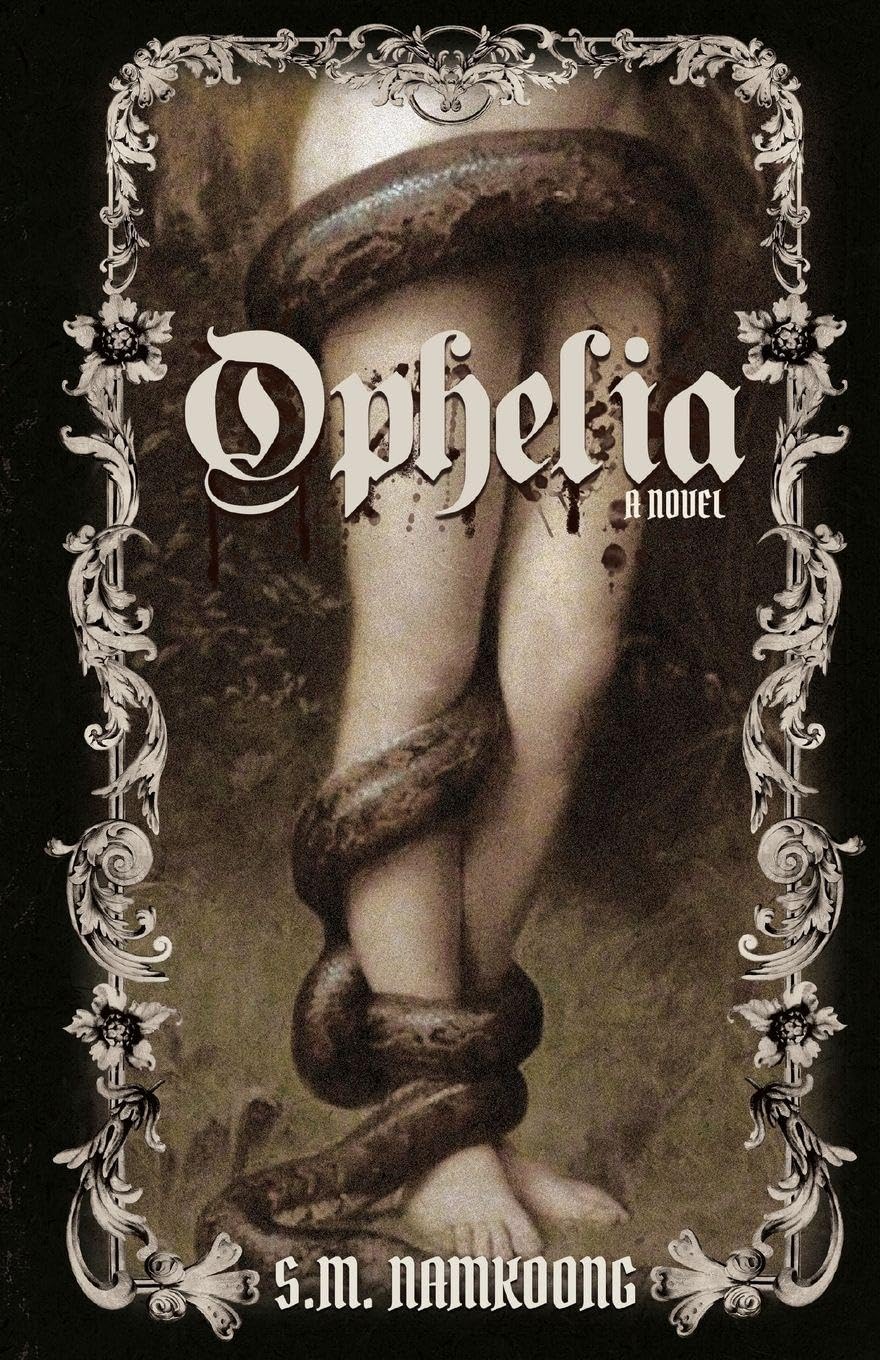
Ophelia
S.M. Namkoong
2025, 434 pages
$21.00
Reviewed by Rory Frasch
S.M. Namkoong’s debut novel, Ophelia, is a fantastic take on the gothic genre. Ophelia is set in a sleepy Maine town after World War I. The story follows Lawrence “LJ” Stoner, a Midwestern painter returning to the United States after a few years abroad. It is an atmospheric novel with a slow pace. LJ’s return to America is tainted when mysterious deaths begin to follow those she interacts with. Namkoong explores the morality of classic vampire stories with a sympathetic, yet critical gaze.
LJ and Ophelia are the highlight of the novel. It is important to understand Ophelia not as an action-forward book. Rather, it is a novel exploring morality and the lack thereof. At its core, Ophelia operates as a conversation about monstrosity. Ophelia’s outlook on life is, at times, horrifying. It is understandable how Lawrence is drawn in by her, despite being conflicted. “Ophelia was a killer, yes, but not a monster. Not to Lawrence. She had met men more monstrous by leaps and bounds. Surely someone capable of such love could not be a being of evil” (344).
Namkoong draws out the plot slowly, building tension with each chapter until Lawrence and Ophelia’s first encounter. Lawrence’s entrancement with Ophelia, therefore, feels gradual. Namkoong’s beautiful prose allows the reader to fall in love with Ophelia, the vampiric antagonist, as well as with Lawrence. Hidden beneath the veneer of romantic lines lies Ophelia’s manipulation. Lawrence’s subdued perspective on the world and eventual need for a stronger hand propel this plot. Her perspectives on gender conformity seem to be shaped by a largely isolated upbringing. This helps to ground the novel within this specific time period, in contrast with the immortal character of Ophelia.
The ending of the novel was satisfying, if bittersweet. Namkoong challenges her readers to question the ethics of survival, in all its forms. In one of Lawrence’s final conversations with Ophelia, she says, “That’s only natural, isn’t it? That’s all you know how to do. To consume. You just consume until there’s nothing left. Then, you move on” (412). Lawrence’s question is one that the novel does not answer. How much responsibility can one attribute to a person’s immorality? The answer is up to the reader.
Rory Frasch is a student at Bryn Mawr College majoring in history. She is a summer intern at Sinister Wisdom.
"Empowerment comes from ideas."
― Charlene Carruthers
"Your silence will not protect you."
— Tourmaline
"Gender is the poetry each of us makes out of the language we are taught."
— Leila Raven