






Sinister Wisdom Newsletter
Login (ONLY for SW staff)


Review of All Fours by Miranda July
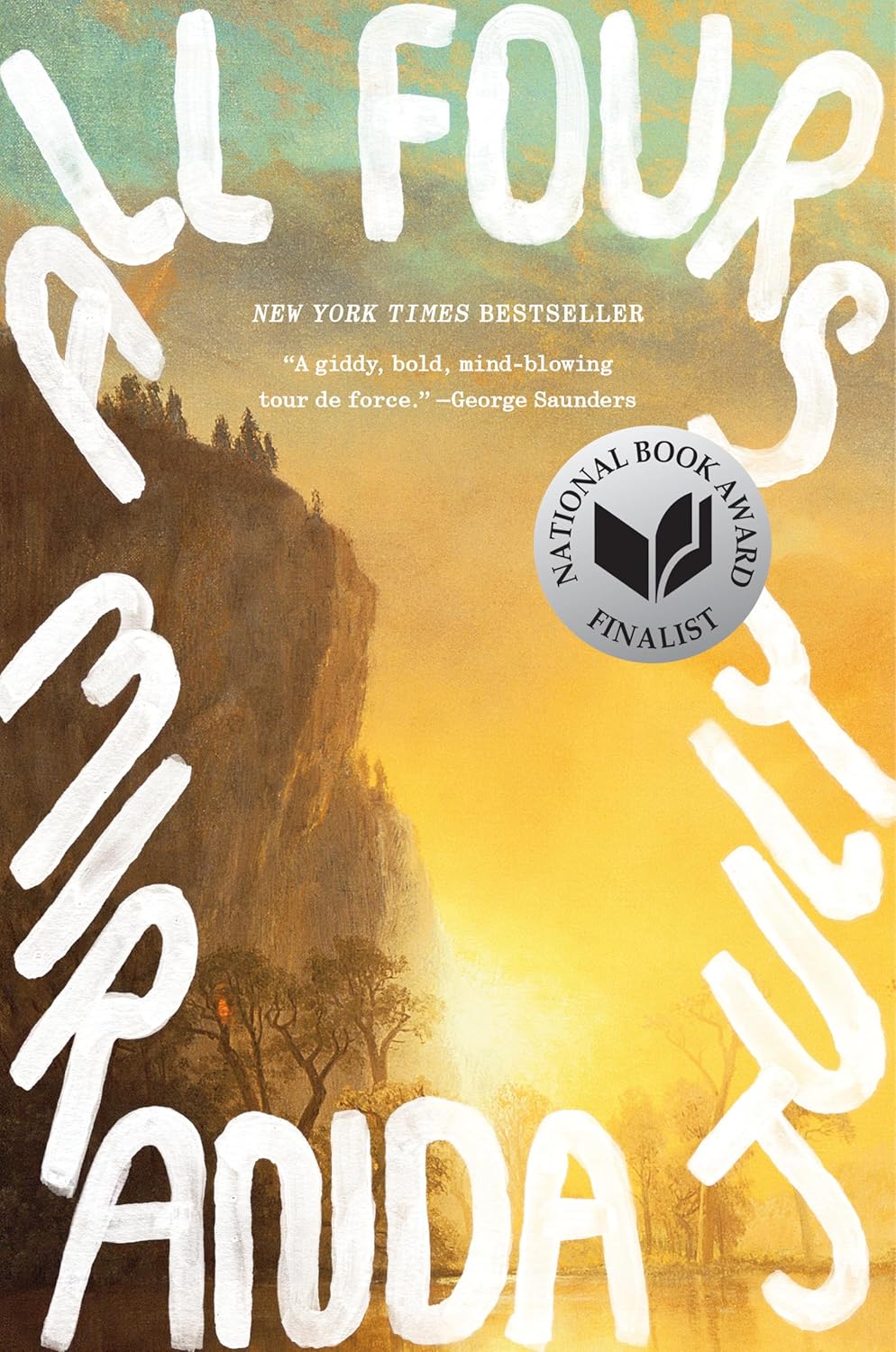
All Fours
Miranda July
Riverhead Books, 2025, 400 pages
$19.00
Reviewed by Kelsey McGarry
In All Fours, a middle-aged multimedia artist sets out on what she imagines will be a straightforward cross-country road trip, only to stop abruptly one hour in. What begins as a practical detour quickly spirals into a spontaneous, messy, and ultimately transformative journey of self-discovery, desire, and midlife reinvention.
July’s writing is a masterclass in blending humor with insight, balancing absurd moments with sharp and empathetic observation. The narrative’s strongest moments lie in the tension between structure and chaos. The initial goal of a solo celebratory road trip promises clarity and direction, yet a series of events ultimately illuminates the possibilities of reinvention. July captures this with a sensitivity that avoids over-sentimentality; the story is messy, sometimes uncomfortable, and deeply human. There’s a persistent honesty in the way the protagonist wrestles with desire, artistic ambition, and society-created and self-imposed expectations of adulthood. As the narrator explains, “For me lying created just the right amount of problems and what you saw was just one of my four or five faces—each real, each with different needs. . . I was a kaleidoscope, each glittering piece of glass changing as I turned” (42). This passage exemplifies July’s refusal to compress the narrator into a single, legible self. The metaphor of the kaleidoscope echoes the novel’s fragmented and shifting structure, while underscoring the tension between chaos and imposed order.
One of the aspects I enjoyed most about the narrator was her lack of certainty or a clear plan for what came next. She moved through the story spontaneously, carrying the reader along as she discovered herself, uncovering her desires, intentions, and next steps in real time. As ideas shifted and circumstances changed, she found herself in an array of situations, continually reshaping who she was and forming new plans along the way. She pulled us off the rails with her, and we regrouped together, sharing in the process of becoming. This willingness to move forward without certainty is captured in the observation that “you had to withstand a profound sense of wrongness if you ever wanted to get somewhere new” (54). This line solidifies the narrator’s willingness to remain inside discomfort rather than rush toward resolution. July frames uncertainty as a necessary condition for transformation rather than failure, reinforcing why the narrator’s improvisational choices feel intentional rather than reckless.
All Fours is a compelling meditation on midlife, transformation, and the unexpected detours that define who we are. This book entertains, challenges, and resonates, leaving readers with a lingering sense of both discomfort and clarity. For anyone who has ever felt lost, stalled, or ready for reinvention, All Fours offers an honest, witty, and transformative journey that will stay with you long after the final page.
All Fours celebrates the small, often overlooked moments that shape our lives. The interactions with friends, strangers, and fleeting encounters carry weight because July writes them with an intimate precision that lingers. Both the humor and the reflection are held sacredly at the very center, striking a balance that keeps the narrative grounded. Readers may find themselves squirming in recognition, seeing parts of their own midlife questions and quiet crises mirrored in the narrator’s messy, courageous choices. When the narrator reflects that “so much of what I had thought of as femininity was really just youth” (70), July exposes how aging strips away culturally reinforced illusions and forces a reckoning with identity beyond desirability. This moment grounds the novel’s larger reflections on reinvention in the embodied realities of midlife. Delving deep into the unpredictable ways life can upend plans encourages, if not forces, the reader’s own inner confrontation with both the absurdities and truths of being alive. The rawness of the narrator’s journey encourages the reader to explore their own internal and external landscapes.
Kelsey McGarry (she/her/hers) lives in Los Angeles, CA, and loves spending time outdoors with her queer community.
"Empowerment comes from ideas."
― Charlene Carruthers
"Your silence will not protect you."
— Tourmaline
"Gender is the poetry each of us makes out of the language we are taught."
— Leila Raven