





Sinister Wisdom Newsletter
Login (ONLY for SW staff)


Dyke Bar* History: Lily Hu in San Francisco, 1954
Dyke Bar* History: Lily Hu in San Francisco, 1954
Jack Jen Gieseking with Michaela Hayes and Mel Whitesell
To complement the launch of the Our Dyke Histories podcast, hosted by Jack Gieseking and co-produced in collaboration with Sinister Wisdom, we’re sharing a reading guide for the decades. For the first season, Our Dyke Histories is spotlighting dyke bars*: lesbian bars, queer parties, and trans hangouts; the structures that made them necessary, the lives they made possible, and the worlds we built from them. This is the second part in a series, with the first part covering the 1920s-1930s!!
Lo, Malinda. Last Night at the Telegraph Club and Scatter of Light. New York: Dutton Books for Young Readers, 2021, 2022.
Last Night at the Telegraph Club is the ultimate queer YA novel: it’s mature enough to enjoy as an adult while still speaking directly to your (gay and scared) inner teenager, while simultaneously offering itself as a genuine place of solace for young people who might be struggling to understand themselves.
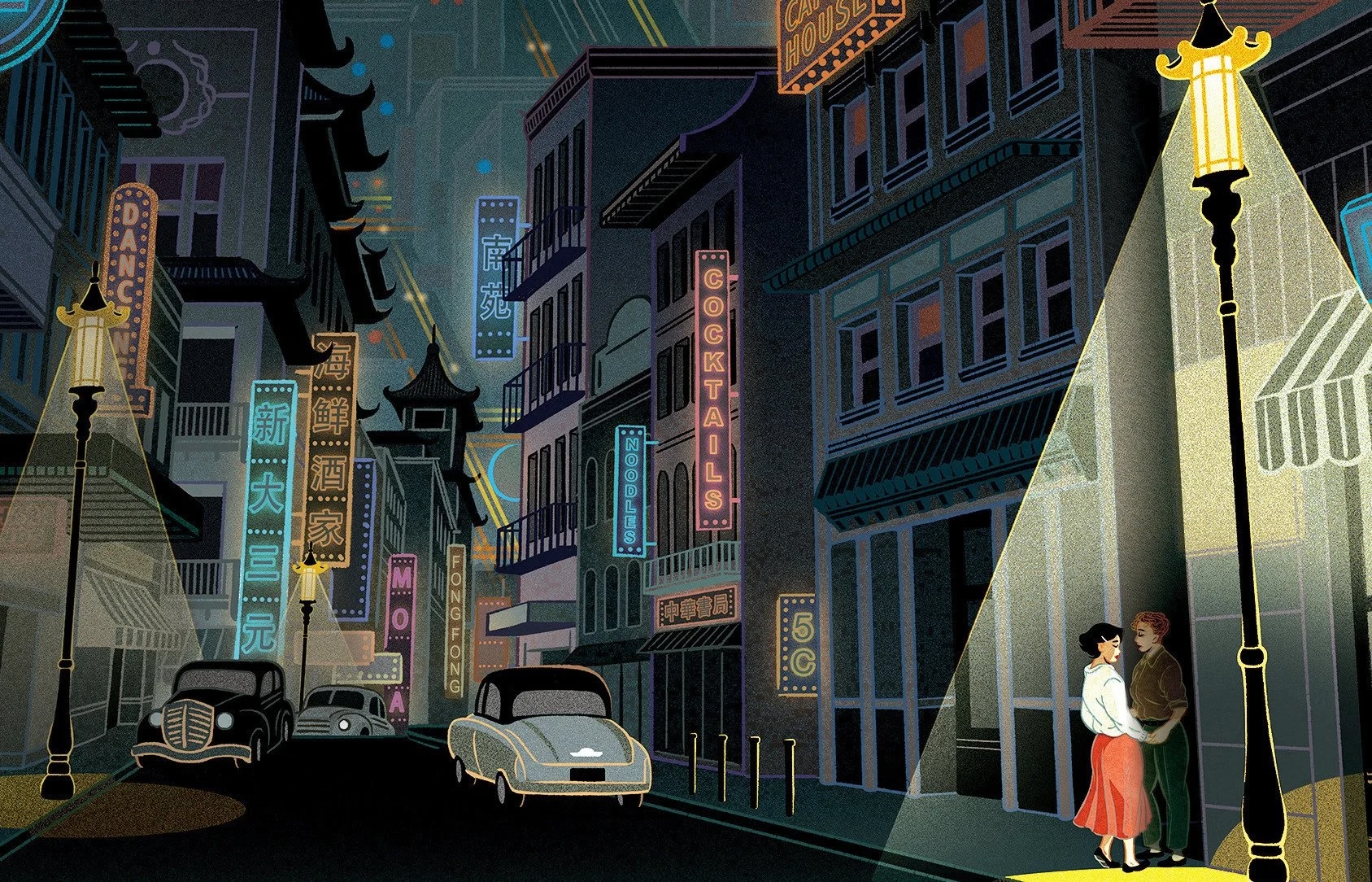
The book is set in 1950s San Francisco Chinatown and follows 17-year-old Lily Hu, a second-generation Chinese-American trying to navigate life as a “good Chinese girl” as she realizes she’s falling in love with her classmate Kath. Kath and Lily soon venture to the secret-not-secret lesbian bar The Telegraph Club, where they find refuge, find themselves, and find each other. While Last Night can be a beach read, company for your public transport (who among us hasn’t cried over a novel on the bus?), or something to tuck you in at night, it’s fair to say that the intensity of the scenes gives you a hint of what the 1950s felt like for LGBTQ+ people, especially Asian lesbians. (Of note: there’s still remarkably less literature on Asian and Asian-American lesbians, so check out Sinister Wisdom’s special issue 120: Asian Lesbians).
We also devoured Malinda Lo’s blog series “Notes from the Telegraph Club”, where she discusses the incredible research she did for the novel. Our absolute favorite is “The True Story of a Raid on Tommy’s Place” – it’s everything you imagine dykes had to live through in the 1950s but, well, real. There’s even photos of folks like Grace Miller, Joyce Van de Veer, and possibly Jeanne Sullivan at bar. Lo writes:
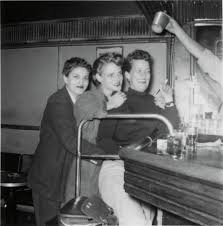
That Wednesday night at nine p.m., what could have been a comfortable, casual weeknight with friends at the local bar abruptly changed. San Francisco police arrived bearing warrants for two of the bar’s owners—Miller and Van de Veer—who were charged with contributing to the delinquency of minors by serving them alcohol. The bar’s patrons were told to leave, which they probably did as quickly as possible, plunging into the night and hurrying away from the neon-lit intersection of Broadway and Columbus.
Meanwhile, the police conducted a search of the premises and claimed to find a heroin kit hidden in the restroom at 12 Adler. Miller and Van de Veer were arrested, and the next day San Francisco’s newspapers printed photos of the two being charged, along with their home addresses. In the San Francisco Examiner image, both women have short hair and wear blazers, and though they must have been afraid, they look nonchalant, even a little annoyed that their night had been interrupted.
Now, you get it! Woah.
Two of us teared up multiple times reading Lo’s books (ages 26 and 46, respectively), and also felt so freed by how much the dykes of our past did for us. And we laughed at times too, to see such consistent sagas of dykedom (but does she like me?!?!!?) reflected back at so many decades later.
We equally endorse the follow up novel, Scatter of Light, but we’ll save the spoilers and just tell you our dear Lily keeps on queering up the West Coast. Both of Lo’s books help us dive in to go back in time to the 1950s, and remind us to keep fighting like hell for the living we are doing today.
Malinda Lo website https://www.malindalo.com/
Image Credit: Grace Miller, Joyce Van de Veer, and possibly Jeanne Sullivan at bar. SAN FRANCISCO HISTORY CENTER, SAN FRANCISCO PUBLIC LIBRARY
"Empowerment comes from ideas."
― Charlene Carruthers
"Your silence will not protect you."
— Tourmaline
"Gender is the poetry each of us makes out of the language we are taught."
— Leila Raven
Add new comment