





Sinister Wisdom Newsletter
Login (ONLY for SW staff)


Review of Florrie by Anna Trench
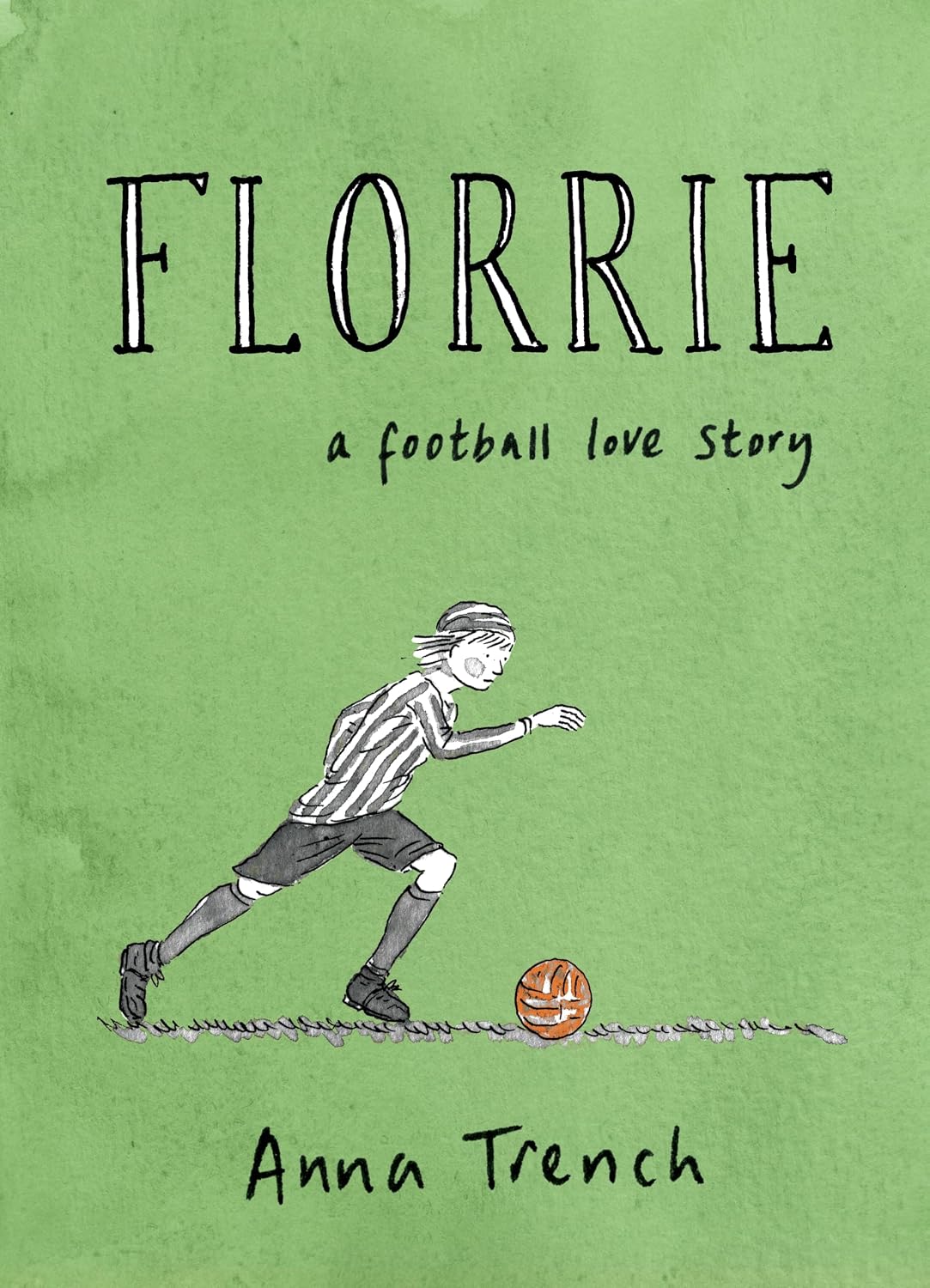
Florrie
Anna Trench
Jonathan Cape, 2025, 192 pages
$38.99
Reviewed by Atlanta Tsiaoukkas
Women’s football has had a rocky history in the United Kingdom, from its early rise in the late nineteenth century to the Football Association’s (FA) 1921 death knell on the sport to the momentous successes of the last few years, including the Lionesses reaching the final of the FIFA World Cup in 2023. Like many other women’s sports, few people know much about its past, and, whilst knowledge of the men’s game often feels compulsory in the UK, the absence of cultural engagement with its female counterpart is striking. Therefore, Anna Trench’s debut graphic novel Florrie provides an invaluable antidote, shining a light on the repression of women’s football. Subtitled “a football love story,” the tale speaks to Trench’s deep love for the sport as well as the women who made waves participating in it. Combining real-world experiences and archives with a fictionalized narrative of self-discovery, Florrie is poignant, quiet, and loaded with rebellious meaning.
Florrie tentatively begins with a football-loving girl who uncovers, on the death of her great-aunt Florrie, a treasure trove of women’s football memorabilia. As the girl stumbles upon never-before-seen photographs of her aunt in football gear, the reader is flung back to 1919 Norfolk to trace Florrie’s secret past. Here, a seventeen-year-old Florrie discovers a local women’s football team, the Holt Ladies, and, with a little convincing, makes steady progress towards, briefly, a career in international football. With a vibrant style which moves with the kicks and flourishes of football played with freedom and joy, Trench recounts Florrie’s development with a care and attention which leaves the reader feeling like they have been right there with her. As the inevitable roadblocks for a 1920s female footballer emerge—familial trouble, unwarranted marriages, stigmatization—the 1921 FA ban, which prohibited associated clubs from permitting women’s matches on their grounds, is devastating. Combining the fact of the ban and the fiction of Florrie’s response, Trench effectively narrativizes this substantially impactful moment in women’s football history, demonstrating how deeply affecting it would have been for women who loved football.
Throughout the narrative, Trench references and illustrates real historical archives of women’s football, providing a web of history which grounds her story. Perhaps Trench’s most famous football reference is the 1920 photograph of two players, one from the renowned Dick, Kerr Ladies team and the other from the French women’s team, hands grasped in a firm handshake. More interestingly though, the women exchange a solid kiss on the lips that seems suspect to modern eyes but was possibly a common form of pre-match greetings owing to other photographs with similar gestures. Trench reinvents the image with Florrie and her French paramour, turning it into a queer image of resistance. Whilst an informed reader may be wary of always interpreting kissing as suggestive of a proto-lesbian impulse, Trench offers a tender perspective which emphasizes the possibilities of women’s football of the period—the opportunity to travel, out from under the thumb of parents and bosses, to widen one’s horizon. In the context of Trench’s narrative, the kiss is more than an oblique hint of Florrie’s sexuality; instead it is a rejection of patriarchally imposed ways of living.
Among the most interesting elements of Trench’s narrative is the generational questions it throws up, ones which—in a contemporary climate where women of different ages are encouraged to compete over whose feminisms are best—are incredibly relevant. The graphic novel begins by questioning why Florrie never revealed her secret past to her football-loving niece. In Florrie’s own story, she wonders whether her dead mother would have approved of her playing, and later on rejects the possibility of living with her French sweetheart to care for her ailing father. The compromises women make under the pressure of familial demands and generational differences are palpable, and in turn highlight the importance of generational solidarity both on and off the football pitch. Though Trench reveals no hints as to why Florrie chose to hide her past from her niece, as a reader you wonder if shame, guilt, or fear fed into these imagined decisions, and find yourself by the end wishing that instead of the melancholy conclusion, Florrie would come back to life to give us a happy ending. However, that very disappointment is what takes Florrie from good to great, an impetus to readers to engage with their families, their communities, and build connections, preferably whilst watching women’s football.
Florrie is a brilliant example of the types of stories that can be told about the history of female athletes, and hopefully signals a growing interest in these stories. The creative use of archives and history also provides an exemplary approach to women’s history, demonstrating how historical accounts can be intertwined with narrative to produce compelling work that encourages the reader to delve further.
Atlanta Tsiaoukkas is a UK-based writer and researcher currently working towards a PhD on queer Victorian schoolgirls and their homoerotic friendships. Find her on Instagram @aatlanta_aa and Substack girlishh.substack.com.
"Empowerment comes from ideas."
― Charlene Carruthers
"Your silence will not protect you."
— Tourmaline
"Gender is the poetry each of us makes out of the language we are taught."
— Leila Raven