The Quanties

“Guncle: A homosexual uncle. Every family usually has one of these.” - Urban Dictionary

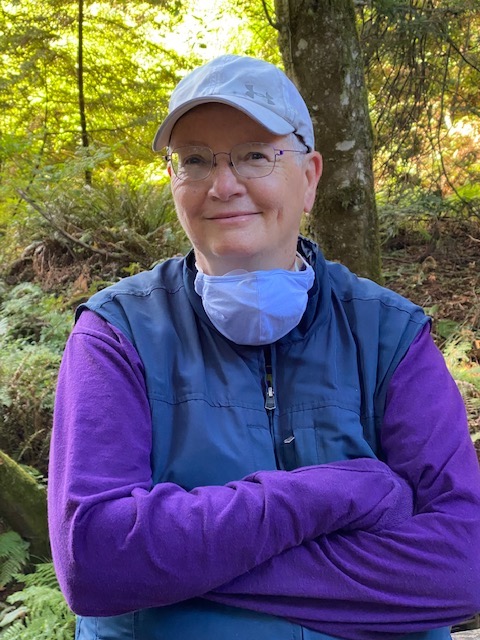
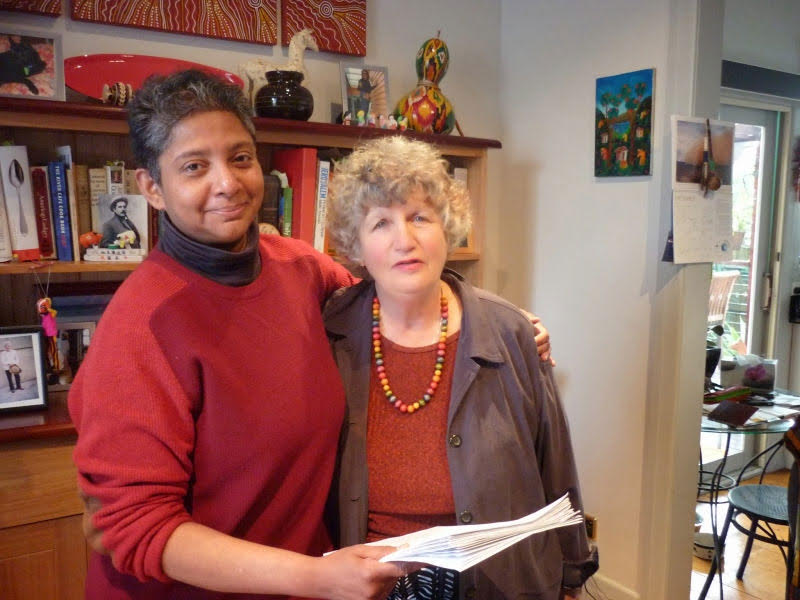
The word Guncle seems to have worked its way into popular vernacular, yet I have not run into language capturing what I consider an equally important family role: the Queer Aunties, “Quanties” for short.

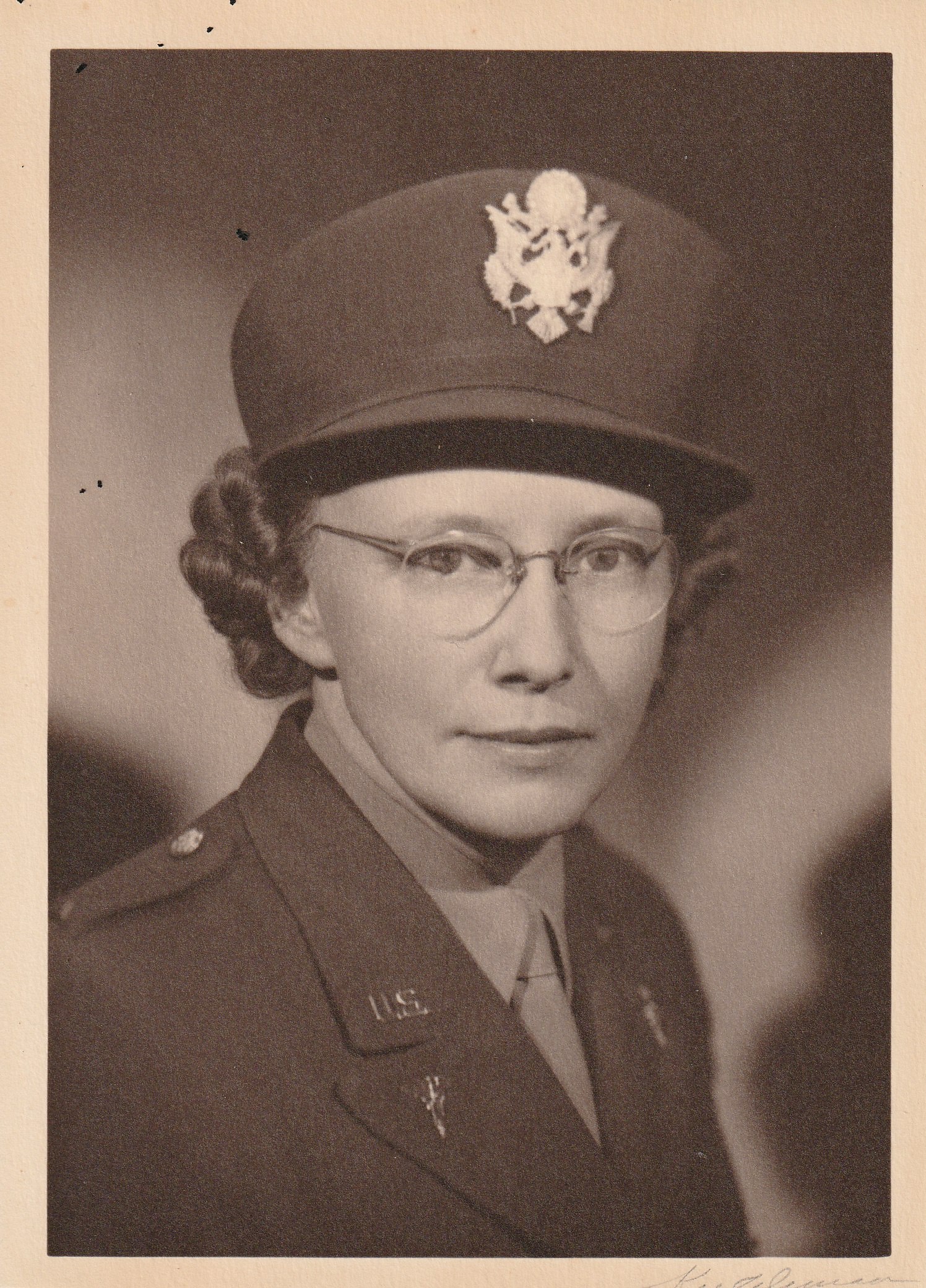
My mother, Donna, had several aunts and uncles, including my great Aunt Vi and her “friend” Martha.

Vi and Martha were nurses during the Korean War, working side by side to triage and treat soldiers in Mobile Army Surgical Hospitals, known as MASH units. They were fond of the TV show, MASH, which, to their view, realistically captured the chaos, danger, and camaraderie of their experience. Unaddressed by my aunts, or the TV show, was the air of secrecy and fear due to the harsh anti-homosexuality policies of the era, which led to the targeted harassment and dismissals of nurses and other service members suspected of sapphic leanings. Later, Vi and Martha lived together, indulged their curiosity and love of learning by taking a wide range of classes together at the local City College during their retirement, and took care of one another. Regardless of how they labeled themselves, it was clear to me they were life partners.

As a child, my siblings and I loved Aunt Vi and Aunt Martha. To us, they both belonged to our family. They were everything one might look for in Quanties. They were consistently delighted to see us when we visited, let us pick oranges in their backyard, and indulged our inclination to climb mismatched antique rocking chairs they collected and configured in a circle in the living room, as if awaiting a secret self-help meeting of unrepentant non-conformists. They even allowed us to adopt their dog, Snooks, a delightful, chubby mutt, whom all of us adored and hated to leave behind when we left their house after visiting.

In my late teens, I embraced my own queer identity and, in my early 20’s, I tagged along with my mother to visit the now octogenarian aunts. I finally broached the question of their relationship with my mom as we drove down the freeway between Santa Barbara and the San Fernando Valley, raising my voice to compete with the semi-truck next to us.

“Mom, do you think that Aunt Vi and Martha are lesbians?”

She paused for a moment before responding, “Well, we did wonder about it now and then.”

I thought, at that moment: how many families throughout time “wondered now and then” about aunts, sisters, or daughters who quietly made a life with partners who were not men?

I asked what Aunt Vi’s own sister and brother thought about her relationship with Martha. “Well,” she demurred, “they sometimes say that Martha is a bad influence on Vi.”

Martha?! The buoyant one who jumps to answer the door first, wears a scarf around her neck like a cravat tucked into her button-down shirts, and ties her hair back in a slick bun with a boyish side part, was apparently kept at a distance by her ersatz in-laws. The butch gets the blame again.

The degree to which Quanties, unmarried aunts, and gender-defying relatives are embraced in families varies wildly. The notion that Martha was never entirely accepted among Vi’s brothers and sisters stuck with me, particularly because this antagonism seemed to run counter to the acceptance and love I had seen from the same group. It made me ever grateful for the enthusiasm with which I was welcomed by my own siblings, nieces and nephews, and more recently, grandnieces and nephews.

When my sister’s three children were young, I was frequently greeted with opportunities to be leapt on under couch cushions, entombed then released in a space under the stairs, and invited to admire mischievous stories about all the different ways my napping partner at the time could be startled awake. When my sister was hospitalized for breast cancer surgery, the distraction of my multi-day visit was enough to diminish the children’s anxieties and divert them from diving onto her recovery bed. As the years passed, my Quantie deeds with children of both family and friends extended to non-judgmental pregnancy tests, general cheerleading, and occasional benefaction. My butch spouse has stepped in as chauffeur, tech support, apartment-hunting escort, and an excellent source for transforming distress into laughter by brainstorming wicked and whimsical ideas for punishing purported wrongdoers.

When I mention the Quanties in my own life to friends, I am nearly always gifted a story of an immediate or distant relative. This is generally a woman who everyone “wondered about” and whose life pried open the doors of possibility in the realms of profession, playfulness, love, or adventure. Even the Quanties who were vilified by family members are often named with curiosity and credited with upending social expectations of women. Whether invisible, beloved, or defamed, their tales frequently and quietly embedded seeds of hope, defiance, and imagination in the children and young adults whose lives they touched.

There is so much I will never know about Vi and Martha. I know they had other close friends who were nurses and teachers, and I wonder if those chosen family members, like mine, knew more intimately about their struggles, successes, and stories. Even with unanswered questions I wish I could pose to them now, I am grateful they are part of my own story, the story of my family, and the too often overlooked legacy of our lesbian ancestors.


Laurie Drabble is a semi-retired academic and active researcher, living in California. She has authored over 100 scholarly publications, mostly focused on advancing LGBTQ+ and women’s health. Laurie enjoys making colorful and quirky quilts; experimenting with creative nonfiction writing; mentoring the next generation of queer scholars; and meandering and sharing culinary adventures with her friends and partner.

Image: 

Then and Now: Did it Get Better?
The year was 1983 and I had come out as a lesbian in the past year. I was a doctoral student at the University of Iowa and got my healthcare at the Student Health Clinic. On this particular day, I was on the table with my legs spread open, feet in the stirrups as the physician sitting between my legs was about to begin my annual pap test. The paper gown crinkled and tickled my legs when she pushed it down out of her way so she could see my face.

“Are you sexually active?” she asked and then she lifted the large metal instrument from the basin of warm water on the metal stand next to her and squirted lubricant on it. I had a fleeting thought as I saw the wicked looking speculum—why couldn’t they make something a little smaller and less torture chamber-like? Really, no woman would have created such a monstrosity. This had to be a man-made device.

“Not with men,” I replied. “I’m gay.”

I heard a horrible clattering noise as the wheeled stool she sat on flew six feet away from the exam table and thumped against the wall. She must have involuntarily pushed off with her legs. Then she jumped up and bolted out of the room without a word. I was stunned, feeling exposed physically and mentally. What should I do? I was frozen for the moment in shock as I contemplated whether to extricate my legs from the stirrups and flee, or wait. There must be a reasonable explanation. I tried to talk myself into some excuse for her behavior that wasn’t related to my coming out to her.

Before I made up my mind, she returned to the room with a grim looking nurse in tow, pulled the stool back to the exam table, and finished the exam in a painful silence. The nurse hovered near the door. Was she there as a witness? Did the doctor think I would hit on her in the middle of a pap test? They rushed out the room, and this time I knew to dress and get the hell out of there.

I had been mostly lucky in my coming out disclosures and had rarely experienced negative reactions, but this one stayed with me for years. I had worked as a nurse in health care settings for ten years by this time and was appalled by the unprofessional behavior of this ob/gyn doctor. When I became a faculty member four years later in the College of Nursing, I was determined to teach students about LGBT issues. I came out in every class, taught students about LGBTQ healthcare issues, and proposed that they ask more open questions, such as “Are you sexually active with men, women, both, or neither?” and “What does being sexually active mean to you?”

I moved to San Francisco in 2005. The Gay Mecca, some called it, but I discovered that I had a more cohesive and larger lesbian community in Iowa City. Around 2010, I switched my healthcare plan and was meeting a new primary care doctor for the first time. She was asking the question in preparation for a pap test. “Are you sexually active?” she asked.

“I’m a lesbian,” I announced. I was about to add that I wasn’t currently in a relationship or dating, but she interjected in a matter-of-fact, no-big-deal tone of voice, “Well, make sure you thoroughly wash your sex toys between uses.” She proceeded with the pap test and I left thinking that as far as health care visits go, this one was fine.

But I pondered this exchange for days. Of course, it was better than my experience in the 1980s. My new doctor had seemed a little bit awkward, but not horribly uncomfortable like the one in 1983 had been. But she had made a big assumption about my sexual behaviors and that felt just weird. By this time, it was common knowledge that some lesbians had sex with men and some engaged in behaviors that carried risk for sexually transmitted infections. She didn’t ask those questions. Instead, she made an assumption.

Asking the simple “Are you sexually active,” is still a challenge for many lesbians I know. If you just say “yes,” you generally get the birth control lecture, at least if you are still young enough to be fertile. Heterosexuality is assumed. If you didn’t want that talk, you had to come out and say something like, “Yes I’m sexually active, but only with women” or some such response. One is forced into disclosure in a way that can feel awkward and forced.

My new doctor hadn’t asked any question that would be relevant to my sexual health. She didn’t ask if I actually used sex toys. She didn’t ask anything except the “sexually active” question. It seemed that we hadn’t really improved in terms of sexual history talk in all these years, at least in mainstream health clinics.

So yes, things were better in 2010, but they were still weird and awkward and incomplete. It’s still anxiety-provoking to come out in a health care setting, especially with your legs splayed open in stirrups awaiting penetration by a cold metal object. Come on, we can do better.


Mickey Eliason is a retired university professor and former teacher of sexuality studies and LGBTQ studies, first at the University of Iowa (1987-2004), then San Francisco State University (2005-2022). She has published several academic books and articles on LGBTQ issues, and now writes mostly creative nonfiction, memoir, and essays. Her favorite project was a book about the unique qualities of lesbian communities in her coming out era (the 1980s Iowa City lesbian feminist community), a humor book called The Dyke Dykinostic Manual (available on Amazon). She also dabbles in lesbian romance.

Image: 

Dyke Bar* History: 1920s-1930s #3 Harlem rent parties of the 1920s and 1930s


Dyke Bar* History: Harlem rent parties of the 1920s and 1930s

Jack Jen Gieseking with Michaela Hayes, Mel Whitesell, Paige LeMay, Syd Guntharp, and Sarah Parsons

To complement the launch of the Our Dyke Histories podcast, hosted by Jack Gieseking and co-produced in collaboration with Sinister Wisdom, we’re sharing a reading guide for the decades. For the first season, Our Dyke Histories is spotlighting dyke bars*: lesbian bars, queer parties,  and trans hangouts; the structures that made them necessary, the lives they made possible, and the worlds we built from them.


Woolner, Cookie. The Famous Lady Lovers: Black Women and Queer Desire before Stonewall. Chapel Hill: The University of North Carolina Press, 2023.

Prior to Stonewall, we’ve long known all too little about the history of Black queer women’s social networks. Of course, these women’s spaces thrived as much as white women’s spaces, and were equally daring, deeply fascinating, and terrifically important. So thank the flipping goddess that Cookie Woolner traces the lives of Black “lady lovers” from blues legends to bulldaggers, from rent parties to private salons in the 1920s and 1930s.

Woolner has every famous Black dyke of the era you’ve ever heard of, like the stud of all studs and gender outlaw, Gladys Bentley and Bessie Smith, to those lesser known powerhouses, Lucy Diggs Slowe, Howard University’s first dean of women, and all of the relationships like Ethel Wiliams and Ethel Water (The Two Ethels are a must read), struggles, advances, and even some juicy hookups between these massive networks of Black dyke.


The stories in her research are moving, inspiring, harrowing, and also sexy. We cannot help but share the incredible lyrics to Ma Rainey’s “Prove It On Me, Blues.” It’s pure fire!

It's true I wear a collar and a tie

Makes the wind blow all the while

Don't you say I do it, ain't nobody caught me

You sure got to prove it on me


Say I do it, ain't nobody caught me

Sure got to prove it on me

I went out last night with a crowd of my friends

It must've been women, 'cause I don't like no men


Woolner’s book also contains the definitive scoop on local papers would target lesbian rent parties as “dangerous to the health of all concerned” due to these fetes’ “combination of bad gin, jealous women and a carving knife.”


Woolner’s book is a powerful example of how lezbiqueertranssapphic nightlife, especially in non-white spaces, shapes itself in creative ways to survive while offering sites for queer peeps to politically organize, develop creative and literary partnerships, and socialize. A must read for Black queer history in the early 20th century.


Our key takeaway? Fixating on lesbian bar history alone leaves out BIPOC experiences, and private parties were the default for lezbiqueertrans life. We only just started to be fully public dykes in the 1930s.


Image Credits (in order of appearance):
  • Bentley
  • A rent party
  • Ma Rainey
  • Smith


    Read the rest of the series:


    Dyke Bar* History: 1920s-1930s Reading Guide

    A reading guide for the decades.
    by Jack Gieseking & the Our Dyke Histories podcast team


    Eve’s Hangout, Greenwich Village, 1926


    Le Monocle, Paris, 1932


    Harlem Rent Parties of the 1920s and 1930s


  • Image: 

    Here's to Hellas and Hair Serums

    Several weeks ago, as I stared out my bedroom window, my eyes landed on the rustic wooden frame perched on the sill. Looking back at me was my first dog, Russell, a sable-colored standard Pomeranian who resembled a miniature lion with a face that always asked, “What’s next?”

    Russell was always ready for adventure. He was my best bud, my swimming companion, and hiking partner. He’d wait in the car while I sat through college classes, content just to be near me. His loyalty stretched across his long sixteen-and-a-half years, and through my twenties and thirties, his love lasted longer than any of my girlfriends. I suppose, back then, I half-expected women to love me with the same eager, unconditional devotion as my little lion-hearted Pomeranian.

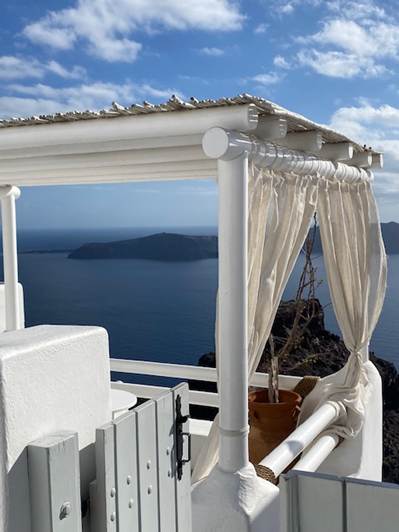
    Today, my wife and I are soaking in a hot tub overlooking the caldera, an active volcano surrounded by the bluest waters of the Mediterranean, just off the coast of Santorini, Greece. The island is impossibly beautiful, like we’ve stepped inside a postcard, white-washed yposkafa cave houses carved into cliffs, domed roofs the color of sapphire, like something straight out of Mamma Mia.

    “You’ve broken the cast,” I say to Kim, finishing my last sip of espresso. “Before you, none of my relationships outlasted Russell.”

    “And here we are, celebrating twenty years,” she says, leaning in for a kiss and holding on just a second longer. This trip is our gift to each other—a reset, a deep breath far enough from everyday life that stress can’t seem to find us. Here, our love feels like it did in the beginning, and we’re bringing that feeling home.

    Later, wandering through Santorini’s winding streets and marketplace stalls, I stop—and I mean stop, because vendors here are professionals at whisking you into their stores before you realize what happened. One enthusiastic man insists he has the best extra-virgin olive oil in all of Greece. Curious—and channeling Russell’s enthusiasm for following wherever life led—I allow myself to be lured to the back of his shop. Moments later, he’s trying to convince me to ship an entire case of olive oil to the US.

    Tempting, but excessive, I politely decline and make for the exit. Before I cross the threshold, he shouts, “Wait!” and thrusts a sleek box into my hands.

    “For your curly hair—serum made of olive oil and. . . Something. . . your woman. . . she will go crazy.” His accent swallows the ingredient list, but I catch the important part.

    And look, I’m a sucker for curly hair products under the best circumstances. Add in Santorini wind, Greek humidity, and the promise that my wife will go wild? Sold. Who needs a case of olive oil when you’ve got a bottle of that?

    Later, without telling Kim, I slathered my neck, shoulders, and breasts with the so-called aphrodisiac serum and scrunched it through my wind-tossed ringlets. I sashay into the bedroom and. . .

    Let’s just say it worked.

    We’ve been having mind-blowing sex in Greece. Maybe it’s the olive oil. Maybe it’s the aphrodisiac hair serum. Maybe it’s being so close to the Isle of Lesbos, or the ancient Greek statues displaying their marble-carved enthusiasm for passion. Whatever it is, I’ll take a few more rounds.

    Cheers to twenty years—and to love that grows richer, bolder, and yes, sometimes a bit wilder, with time.


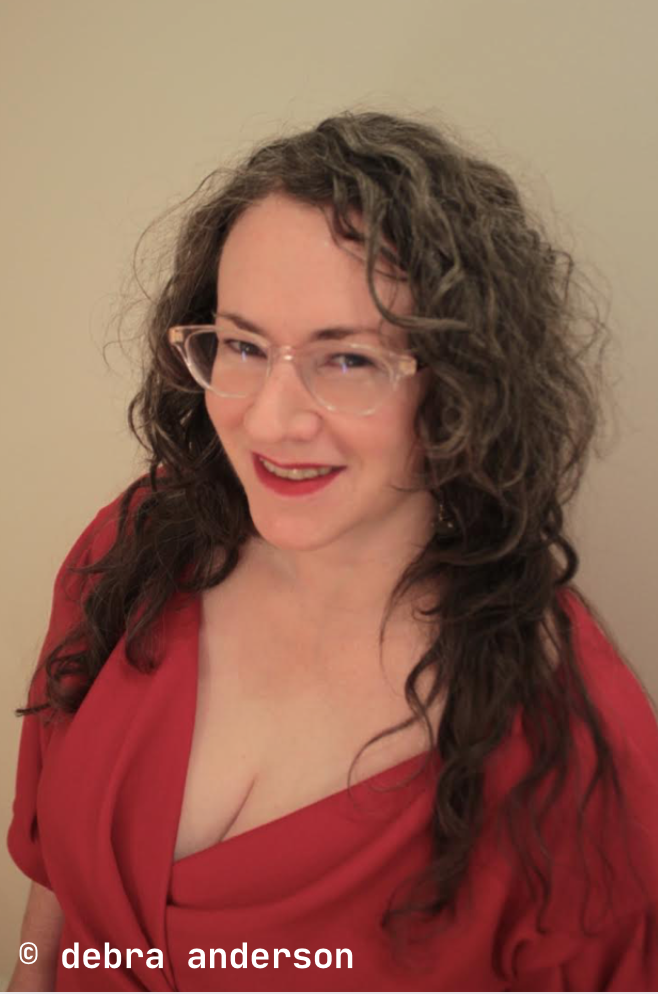
    Kara Zajac is a freelance writer, chiropractor, mother, wife, entrepreneur, and musician. Her debut, The Significance of Curly Hair: A Loving Memoir of Life and Loss, won the 2025 IPPY Silver Medal for Inspirational Nonfiction and was chosen for the Best Books We Read in 2024! by the Independent Book Review. Its follow-up, The Special Recipe for Making Babies, was a finalist in 2022’s Charlotte Lit/ Lit South Awards for Nonfiction. Kara’s work has been published in Bay Area Reporter, Lesbian.com, Voraka Magazine, Story Circle Anthology, Imperfect Life Magazine, Ripped Jeans and Bifocals, and Just BE Parenting. Kara keeps people laughing with her blog www.karaZajac.com and is happy to speak at book clubs and grief support groups. She resides in North Georgia with her wife, Kim, and daughter, Senia Mae.

    Image: 

    Dyke Bar* History: 1920s-1930s #2 Le Monocle, Paris, 1932


    Dyke Bar* History: Le Monocle, Paris, 1932

    Jack Jen Gieseking with Michaela Hayes, Mel Whitesell, Paige LeMay, Syd Guntharp, and Sarah Parsons

    To complement the launch of the Our Dyke Histories podcast, hosted by Jack Gieseking and co-produced in collaboration with Sinister Wisdom, we’re sharing a reading guide for the decades. For the first season, Our Dyke Histories is spotlighting dyke bars*: lesbian bars, queer parties,  and trans hangouts; the structures that made them necessary, the lives they made possible, and the worlds we built from them.


    Georges Brassaï’s 1932 photographs of Parisian lesbian club Le Monocle are some of the most enduring images of early 20th century queer nightlife. The monocle itself—worn by masculine women in Paris and in normative-bending circles across Europe—is a specific queer visual code, a marker of gender presentation and affiliation. In other words, the monocle is the early 20th-century Parisian equivalent of the 2000s' carabiner.

    The images offer a dense visual archive: Lulu de Montparnasse, the club’s owner, in tailored menswear; patrons whose postures and gazes index intimacy, ease, and self-fashioned gender; the juxtaposition of elegance and risk that characterized interwar lesbian nightlife. The most reproduced image depicts the butch athlete Violette Morris and her partner.

    Morris’s life, both extraordinary and troubling: she was an Olympic-level athlete with over 50(!) medals, gender nonconformist who had a double mastectomy because she said it was thus easier to drive her racecar, and, tragically and violently, a collaborator with the Nazi regime. Morris’ life speaks to the complexity of queer history, and how we complicate and must confront the fascism of today.

    Viewing the Le Monocle photographs nearly a century after they were taken, we’re struck by the similarities between patrons of Le Monocle and modern dykes. Many of us still dress to the nines to stare pensively into the distance. These photographs resonate not because they romanticize the past, but because they show a lesbian place that is recognizable: a room where dykes and trans people gather to see and be seen, to craft gendered and erotic worlds with one another.

    Notably, Le Monocle lasted on for decades, a rare accomplishment for a lesbian bar. It was also a hub for sex workers and a place where working-class dykes gathered.

    Paris rang all strata to its urban enclaves, like a clear bell of where to find home. Paris was brimming with wealthy lesbianism the likes of Natalie Barney’s salons, Gertrude Stein and Alice B. Toklas’ walkabouts and rideabouts, and many other many dykes. If you want to dive deeper into the historical muff of a century of lesbian Paris, we heartily recommend Tamara Chaplin’s thick and detailed Paris Becoming Lesbian: A Queer History of Modern France. And if you just want to know about the wealthy, or you too are obsessed with the birth of modernism, Diana Souhami’s No Modernism Without Lesbians is the perfect beach read.


    Read the rest of the series:


    Dyke Bar* History: 1920s-1930s Reading Guide

    A reading guide for the decades.
    by Jack Gieseking & the Our Dyke Histories podcast team


    Eve’s Hangout, Greenwich Village, 1926


    Le Monocle, Paris, 1932


    Harlem Rent Parties of the 1920s and 1930s


    Image: 

    Dyke Bar* History: 1920s-1930s #1 Eve’s Hangout


    Dyke Bar* History: Eve’s Hangout, Greenwich Village, 1926

    Jack Jen Gieseking with Michaela Hayes, Mel Whitesell, Paige LeMay, Syd Guntharp, and Sarah Parsons

    To complement the launch of the Our Dyke Histories podcast, hosted by Jack Gieseking and co-produced in collaboration with Sinister Wisdom, we’re sharing a reading guide for the decades. For the first season, Our Dyke Histories is spotlighting dyke bars*: lesbian bars, queer parties,  and trans hangouts; the structures that made them necessary, the lives they made possible, and the worlds we built from them.


    Katz, Jonathan Ned. The Daring Life and Dangerous Times of Eve Adams. Chicago Review Press, 2021.


    The famed (and likely apocryphal) story of sign hanging in Greenwich Village that read “Men are admitted but not welcome” has circulated widely. It remains one of our favorite urban legends of queer history, and its imagined presence gestures to something real: Eve’s Hangout was the first recorded, proto-lesbian tea room in 1920s Greenwich Village, in NYC, and in the U.S. Jonathan Ned Katz’s biography offers a deeply researched account of Eve Adams—born Chawa Kotchever in Poland—whose migration, political organizing, book peddling, and self-fashioning illuminate the contours of queer life across transnational and urban geographies.

    Katz traces Adams’s trajectory into anarchist circles with Emma Goldman, her self-publication of Lesbian Love (arguably the first lesbian community study in the U.S.), and her creation of a space that gathered artists, poets, theatergoers, and queer women. Eve’s Hangout a social space: a room where non-normative desires, Left politics, and gender variance could coexist. Because she offered a “setup”--the non-alcoholic elements you’d mix with the flask in your pocket–she even survived alcohol. Although, like today, you might have just gone in for the tea. Given the segregation at the time mixed with Eve’s radical politics, these were likely primarily white people, and working-class Leftists at that.

    Tragically, J. Edgar Hoover himself deported Goldman, Adams, and so many other important organizers. But this isn’t the end of their adventures–which we shall not spoil here. If there’s anyone who can show us all how to live and keep fighting, it’s Katz on Adams.


    Read the rest of the series:


    Dyke Bar* History: 1920s-1930s Reading Guide

    A reading guide for the decades.
    by Jack Gieseking & the Our Dyke Histories podcast team


    Eve’s Hangout, Greenwich Village, 1926


    Le Monocle, Paris, 1932


    Harlem Rent Parties of the 1920s and 1930s


    Image: 

    Notes From a Wildly Intense and Sensitive Sapphic #1

    About a month ago, in a fit of internal rage and frustration, I quit my job. I was working as a cook in a small tourist city where the manager was a gay white teenage boy with a blaccent, and the head chef was a white Chicano eager to tell me about how he had a “head full of dreads” a few years back. Because, when you’re the only Black person in a professional work space, it’s likely that your coworkers will try to appease you by mimicking Black culture. It’s micro aggressive, dehumanizing, and embarrassing to watch.

    Often, I meet white people and get the sense they’ve never had a Black friend before. This sense was deeply affirmed by a 2014 study that discovered “75% of white Americans have entirely white social networks without any minority presence.” This Washington Post article verifies that a huge percentage of white Americans are unfamiliar with relating to, befriending, and creating authentic connections with Black and non-Black people of color.

    To be frank, it’s white supremacy. It’s this subconscious disease that pushes white people to center themselves, and other white people, based on a racial construct that has never been real. It was made up to wield power, and disenfranchise BIPOC, and working/poor communities. This imaginary thing, with deadly consequences is passed from generation to generation, like a baton from one white person to the next as they upkeep systems of oppression that harm more than they have ever helped.

    I’m caught between absurdities- I want to laugh, or vomit, or both. I’m sure that somewhere out there, a white person is using my name to justify that they “do have Black friends,” “don’t see color,” “have never been racist” meanwhile, ignoring the necessary and daily work it takes to detangle ourselves from colonized actions, mindsets, and ways of being together.

    I am a Black person. I am a lesbian. I am an immigrant. And I don’t trust white people, because quite honestly, I haven’t been given any reason to. I don’t have white lovers or white friends. Okay. One. I do have one white friend, who at this point I consider us family.

    We were colleagues and activists attending a Building People Power conference. We got along well. I always liked their wild humor, bold fashion, and general friendliness. And, as an introvert, I especially appreciated that they were willing to carry conversations in group spaces- as I took each opportunity to melt away into my body.

    The conference was soon ending, so a group of us went out to karaoke. It was a diverse, punk crowd. I was sitting, sipping my drink, when a white woman sauntered up from across the room to touch my hair. My friend jumped out of their seat, immediately confronted this person, and moved between us. This woman started to cry and play the victim, as if she didn’t just cross my physical boundaries. Inwardly, I was rolling my eyes so hard. Outwardly, I de-escalated and sent the racist on her fragile way.

    The best part of that night was getting to see my friend’s ethics in motion. It was nice. I’m drawn to passionate people, and I felt a mutual loyalty freshly cementing. Isn’t sapphic friendship healing? The same passion, romance, and understanding we bring to our partners, we can’t help but bring into every other connection we create. We were the only lesbians on the team, and it informed so much of how we took up space. Our willingness to go toe-to-toe with men, our desire to include femme and nonbinary thought/intelligence/creativity, our courage to be so tremendously gay out loud.

    Racism, patriarchal and transphobic ideology walk hand in hand. They are tightly woven into each other, and work collaboratively. It tells us that the safest place is in proximity to power- is in connection to men. Double points if they’re white, triple points if they’re wealthy. It convinces us to find refuge anywhere but ourselves, or with community. And it is such a brave, and rewarding act to resist, and make home elsewhere. My queer worlds with my queer friends makes me strong enough to face “white supremacist capitalist patriarchy" (as bell hooks refers to it as) with grace, precision, and confidence, even at times where it is very difficult. It makes me hopeful.

    May we each be empowered by the belief that we are worthy, and our freeness is interconnected will set us aflame to speak up in, or outright leave where our dignities are challenged. This is my ode to Black Trans pleasure, Black Trans joy, Black Trans madness, Black Trans silence, Black Trans eroticism, Black Trans brilliance, Black Trans domesticity. My deepest love and honor to the queer allies who devote their time, effort, and energy to transform our conditions so that we can all take breath.


    sparrow Gore (they/them) is reimagining a softer planet. sparrow Gore is a lesbian Sudanese-American farmer, abolitionist and writer. sparrow’s work is informed by Black feminist tradition, and liberationists Audre Lorde, Nikki Giovanna, bell hooks, and Octavia Butler ; who moved forward a sociopolitical movement that challenged the intersecting oppression and tactics of racial capitalism. sparrow seeks to make portals with their language, to take us to the hearts of reality and the limitlessness of Black queer imaginations.
    Image: 

    Lesbian Films and Media: Curating the Lesbian Lives Film Festival


    Lesbian Films and Media: Curating the Lesbian Lives Film Festival

    An Interview with Meghan McDonough by Mel Oliver

    To complement the launch of the WMM Lesbian Lives Virtual Film Festival, in collaboration with Sinister Wisdom, we’re sharing an Interview with curator of the conference lineup, contributor to Sinister Wisdom's 2026 calendar, and independent filmmaker, Meghan McDonough!

    I spoke with filmmaker and journalist Meghan McDonough over Zoom in the aftermath of the Lesbian Lives Conference, where she curated a striking and expansive film program that continues to resonate beyond the event itself. As part of a virtual film festival presented by Women Making Movies, the selected films are available to stream from December 22–29, offering audiences a rare opportunity to engage with lesbian cinema that is intimate, international, and deeply rooted in lived experience.

    Our conversation unfolded as both a reflection on Meghan’s first time curating a program of this scale and a broader meditation on queer film festivals as sites of connection, discovery, and collective care. From volunteer labor and international networks to works-in-progress screenings and audience dialogue, Meghan speaks thoughtfully about what it means to build cinematic spaces where lesbian histories, futures, and everyday lives can be seen and felt.


    Mel: Meghan, thank you so much for speaking with me. I’m still reeling from the conference and all the wonderful connections that started and rooted themselves deeper. I was looking forward to the films and found the theatre to be a sanctuary itself within the rhythm of the conference. Each time I caught a showing, I immediately felt wonder, seen and entranced by watching these stories with a room full of lesbians. Was this your first time curating a program like this?

    Meghan: Yes, it was a totally new experience for me. Old Lesbians was the first independent film that I’ve directed, so that came at the end of 2023, and that was my introduction into the world of film festivals as a filmmaker.
    I had been to several events like this in the last couple years, but it was my first time being on the programming side of things.
    And, yeah, it definitely gave me a lot of appreciation for all the volunteer work that goes on behind the scenes, not just in terms of film curation but in terms of conferences too!
    I was so impressed by all the volunteers that were making everything happen, a really monumental achievement and it was a lot of fun! Lesbian and queer film is my favorite topic so it was just a great excuse for me to explore new, great lesbain films I wouldn’t have seen otherwise.

    Mel: Wow, that's fantastic! What guided your choices when curating the film lineup for Lesbian Lives? What were your thoughts, feelings and emotions?

    Meghan: Like when I first started stepping into curating it? I was definitely very excited, to try to figure out how the puzzle pieces work together, how the films might complement each other in a program like this. I was excited to showcase films that I had already seen and wanted people to see and I was super interested to delve into others that I had never heard of.
    It was a mix of submissions and then reaching out to filmmakers, whose work I’d seen at other festivals or just were recommended to me by friends in this community.
    As someone in the audience, films I enjoy the most are ones that make me laugh and cry ideally. So I’m always looking for stories that feel nuanced and personal to the filmmaker’s experience, whether, place specific or identity specific and I think that specificity lends itself to powerful emotions that resonate in the audience.
    I also wanted the scope to be as international as possible given the theme of the conference, “The Lesbian International: Creating Networks of Knowledge Across Space and Time." So, I spent time looking to see what films festivals around the world programmed.

    Mel: Yes, the films I was able to see (Es la reducción mínima del abismo (15 min), directed by Delfina Romero Feldman, and Ferro’s Bar (24 min), co-directed by Aline A. Assis, Fernanda Elias, Nayla Guerra, Rita Quadros.) during the conference were in different languages and gave such a layered, exuberant look into enclaves of lesbian lives in places that I’d never heard of and I really appreciated the non-U.S. context, it felt mystical, to see lesbians carving space wherever, whenever!

    Meghan: We really are everywhere. And I think in a lot of ways other countries support independent filmmakers in a more robust way.
    So, yeah, it definitely felt like a magical discovery process and I love meeting other filmmakers and film enthusiasts too.
    That's been one of my favorite parts of showing Old Lesbians at festivals is getting to see the choices the other performers have made, and getting to watch those films together. One of the films I showed, Saigon Kiss, shout out to my friend, Hồng Anh Nguyen. She is from Germany, but lives in Vietnam.
    We met at a film festival last year. I loved her film then, so I wanted to make sure that I included it in this program. Just a glimpse of lesbian life that I was not privy to before and film is a really great vehicle for that

    Mel: Oh absolutely, thank you. Next, can you talk about the conversations you had with collaborators that helped shape the final line up? Were there moments that surprised you?

    Meghan: I did bounce some ideas off Julie, but yeah, I was the main film curator. But I started with the submissions and those were great and honestly very difficult choices. There was a lot of work I was really impressed by and a lot of filmmakers I was made aware of, so I was honored to watch all the samples that people sent in.
    Tzeli, a Greek filmmaker, who I met by way of our films being screened together a few times, and for the first time when it screened in Lesbos, where she is from. So of course, I wanted her film called Lesvia about the Isle of Lesbos in the program.
    In all, I wanted the final lineup to be a mix of films I’d seen at festivals in the last couple years and works that I wasn’t aware of and came up on my radar through submissions.

    Mel: Wow okay, A lot of power!

    Meghan: Yeah, I was like, whoa. Okay, I had also never been to an event where we had a work in progress screening, so there were a lot of new surprising things that actually worked out so well!
    I know as a filmmaker that most of us are working on something new or multiple projects at the same time and I found in my residency with BRIC in Brooklyn, we ended with a work in progress screening, and we got feedback from the audience. I found that super helpful and wanted to bring that atmosphere to Lesbian Lives. As an independent filmmaker it can be a very isolating process, and I found that as much as you’re able to engage your work with audiences and talk to people about it the better.

    Mel: Mmm. That’s amazing to hear, it kind of goes into a later question of mine. I very much admire you using the tools you learned and putting them to action, as an aspiring filmmaker whose like, where are these films going to go? This gave me a little nudge!

    Meghan: Yeah, you just kind of do it and then have people see it before it's actually finished and alleviate some of that tension, at least for me, so that's a good start and can be super motivating because you can get out of your head. So I definitely encourage you to share your work as much as you can

    Mel: Ahah exactly! Thank you!

    Mel: For conversation flow, my next question, if you could dream forward, what would an ideal lesbian queer film festival look like? Or what have the ones you’ve been to been like?

    Meghan: I would say my favorite film festivals are the ones that involve industry talks and an educational component.
    Ones that involve a lot of networking, meals, mixers and gathering opportunities for filmmakers outside of the showings. Hearing from people who work in distribution, artists giving talks on their craft, because I think the best festivals are the ones that have established and emerging filmmakers present. Ideally a place for learning and collaborations to start.
    Like, last year, at the Palm Springs Short Fest, which was a great festival, I met a friend and collaborator and we are co-directing a documentary about queer archives around the world. I think the intergenerational component is also important, because there aren’t many spaces where lesbians of different ages get to be in conversation. [At lesbian lives] There was so much going on and it felt like everyone who was there was either volunteering or participating in a panel. So I think when everyone is invested in that way, when they’re bringing their own skill and knowledge to the space , everyone’s learning from each other and that's the best setting to be in!

    Mel: Yes, yes I totally agree! Riffing off that question a little more, how do you imagine lesbian and queer festivals evolving?

    Meghan: Accessibility!
    I think since COVID a lot of festivals have a hybrid model. So they have programming for screenings and talks in person and virtual which is a great model to keep.
    Most major cities in the U.S. now have a queer film festival, some well known ones; Newfest in New York, Frameline in San Francisco, Old Lesbian played at a festival called Out South in Durham North Carolina, and there's also Wicked Queer in Boston.
    They are kind of all over, and for the most part volunteer run, it’s just people who are really passionate about this, making it happen. So I think accessibility can be a challenge due to lack of funding that these organizations can get, so the more support then the better because there is a lot of value to getting people there in person.
    I”ve only been in the independent film space for the last two and a half years, but to dream forward I would like to see more dedicated funds for queer filmmakers of color specifically.
    I think its really important that people who are telling stories and are telling stories about a specific experience have the lived experience themselves.
    Realities and truth can get distorted, otherwise which really changes the public perception in the way that's inaccurate. And yeah, every filmmaker comes with their own perspective. So the more diverse viewpoints that we can get out there the better because it's just reflective of the world we live in.
    There’s still a lot of representation gaps, so the more funds that create space to support these voices the better.

    Mel: Mm I feel that struggle consistently. As we come to the end of our conversation I am interested in any memorable moments within your experience.

    Meghan: Moments in General?
    I really enjoyed the Q&A portion for the films during the conference. I didn’t know how the conversations were going to work out but there were some really thoughtful questions from the audience and answers from the filmmakers that came.
    Although you try to curate and be there for everything that can go wrong, there is bound to be technical failure, which unfortunately happened while I was out of the theater. So another memorable moment–because it's a lesbian conference, of course a friend stepped in (shout out Cheryl Furjanic) and saved the day, and that felt amazing!
    That's the great part of being in a community in a safe space is people step up and make things happen. So even though I was intimidated going into this, as a younger filmmaker, never having curated a filmfest program, I felt really safe and in good hands with everyone as well as the audience.

    Mel: I’m so happy for you, and glad this was your first experience!

    Mel: Before we go, do you have any guiding principles that you would give to emerging filmmakers or folks looking to curate a film festival?

    Meghan: Be open to films from all different sources. I think subscribing to independent film newsletters is a good way to learn about films, go to as many events and festivals as you can!
    For curating, I think it's the better problem to have too many good films you have to narrow down. And try to do as much as you can as early as possible so you can leave a buffer for making sure you get materials, description and technical information on time, leading up to the event.
    Also, be open to delegating things. I moderated some of the Q&As, but also some of the attendees did an incredible job moderating, so that was wonderful. Do what you can to create a dynamic space for everyone to be an active part of what you're building.

    Mel: Meghan, what a wonderful opportunity talking with you! Thank you for speaking with me and I loved the films I saw during the conference. You did a magnificent job and I admire your gusto for taking this on! Those 4 days are going to stick with me for the rest of my life! One last plug for those who will be reading – I want to know – are there any films that you’re excited about seeing, or any films from festivals you’ve been to you’d recommend?

    Meghan: Saigon Kiss (dir. Hồng Anh Nguyễn) and Lesvia (dir. Tzeli Hadjidimitriou) are actually the only ones on that list that I saw at festivals––Palm Spring ShortFest and BFI Flare respectively. I also really liked Iris Brey's series Split and Rosanagh Griffith's Dope Fiend at BFI Flare. And this isn't a queer film necessarily, but I loved Vidhya Iyer's Giving Mom the Talk at Cleveland International Film Festival. Plus I Could Dom (dir. Madison Hatfield) and Spermicide (dir. Cat Davis) at the same fest.

    Meghan also recommends all the films from the Conference lineup: (p. 8-9 of The Lesbian Lives Conference program ).

    The films Meghan curated for the Lesbian Lives Conference reflect her commitment to specificity, emotional resonance, and global lesbian presence stories that make space for laughter, grief, tenderness, and recognition across borders and generations. The full Women Making Movies virtual program is available to stream during the week of December 22–29, inviting viewers to encounter films that might otherwise remain unseen, yet linger long after the credits roll.

    Meghan’s award-winning documentary short, Old Lesbians, is a loving, attentive portrait of lesbian elders and the worlds they have built, sustained, and passed forward. The film has screened internationally at festivals and institutions including the British Film Institute, the California State Capitol, and the American LGBTQ+ Museum, and was featured on the 2024 IDA Documentary Awards Best Short Documentary Shortlist. A still from Old Lesbians also appears in the Sinister Wisdom 2026 Calendar, to which Meghan proudly contributed.

    You can learn more about Old Lesbians here

    Visit Meghan's official website to follow her ongoing work or find her on Instagram @mmdonough3.

    Image: 

    Dyke Bar* History: 1920s-1930s Reading Guide


    Dyke Bar* History: 1920s-1930s

    Jack Jen Gieseking with Michaela Hayes, Mel Whitesell, Paige LeMay, Syd Guntharp, and Sarah Parsons

    To complement the launch of the Our Dyke Histories podcast, hosted by Jack Gieseking and co-produced in collaboration with Sinister Wisdom, we’re sharing a reading guide for the decades. For the first season, Our Dyke Histories is spotlighting dyke bars*: lesbian bars, queer parties,  and trans hangouts; the structures that made them necessary, the lives they made possible, and the worlds we built from them.


    An intimate, black-and-white photograph of women dancing in one another's arms to a live band at a bar.

    When we talk about the 1920s and 1930s as a queer era, it’s usually framed in smokey Harlem cabarets, Greenwich Village speakeasies, and stolen glances around the world. Prohibition blurred the lines between respectable and illicit nightlife, creating underground spaces where coded glances, whispered introductions, and backroom gatherings could bloom into something bigger. Even as laws and morals tried to shut queerness, gayness, lesbianism, and transness down, urban centers were buzzing with creativity and connection. Lesbian, gay, and LGBTQ bars, cafés, and parties emerged as places to test out desire, find chosen family, and build lives beyond the reach of traditional expectations.

    Our foremothers and fore-gender-expansive ancestors weren’t just surviving: they were innovating nightlife, creating dyke bars before “dyke bar” was even a recognized category, and leaving us receipts that are still hot a century later. These decades did not offer safety, but they did offer possibility. People built bars, cafés, salons, parties, and networks. These were spaces where lesbian life was not merely surviving, but generating new social forms. What constellated in these rooms—intimacy, style, mutual support, conflict, eroticism, art—was at once ordinary and transformative. The spatial politics of these sites reveal much about how lesbians negotiated risk, surveillance, class, race, and gender presentation to create something like a livable world.

    The interwar period is often treated as an interlude, but they were foundational to our present day's lesbianism and lesbian spaces. These dyke geographies still structure how we inhabit nightlife, how we seek community in the day and night, and how we create lesbian belonging. From Greenwich Village to Montparnasse to Harlem’s rent-party circuits; dykes, bulldaggers, lady lovers, and gender-expansive people were inventing infrastructures of connection. A century later, the monocles and tea rooms might be artifacts—racecar-driving lesbians are still happening, of course—but the geographies they built echo in every lesbian bar, queer house party, and trans do-it-yourself gathering where we continue to make space for ourselves and one another.

    While many of you already know the long-adored Odd Girls and Twilight Lovers: A History of Lesbian Life in the Twentieth Century by Lillian Faderman–a revered and trusted source of lesbian history–we’ll be reviewing two new amazing books and some venerable images of 1920s-1930s dyke bar* history on the podcast. Stay tuned!


    Read the rest of the series:


    Eve’s Hangout, Greenwich Village, 1926


    Le Monocle, Paris, 1932


    Harlem Rent Parties of the 1920s and 1930s


    Image: 

    October 9, 2025 (by Barbara Johnson)


    I walked this forest trail with you for years.

    Now, alone, without you, for three.

    Looking for fairy bowers. Owls. Or a sign that you’re still with me.

    Had a memorial bench installed in your memory.

    To commemorate our love of this trail, the nature sounds, the creatures, the Jacks in the Pulpit, the “white dog,” the peaceful holding of our hands.

    “… Who walked this trail every weekend with her wife, Barbara.”

    Visited six days before the anniversary of your death to find the words “her wife” scratched out. Unfixable. Someone trying to obliterate our love, our life together, our existence. Peace turned to menace.

    “The love that dare not speak its name.”

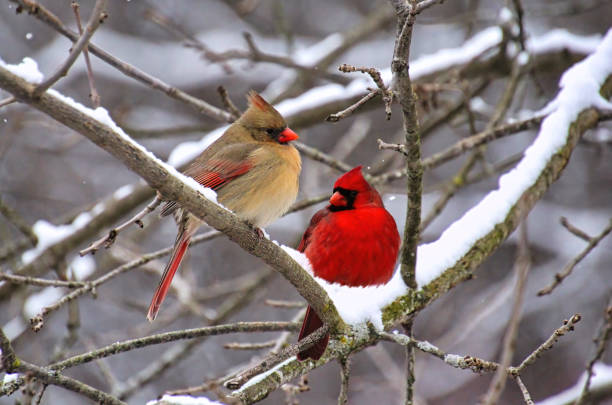
    A female cardinal alighted on a tree in front of me as I sat sobbing on your bench today, the anniversary.

    “Cardinals appear when angels are near.”

    Was that you?


    Barbara Johnson is a former Naiad/Bella Books author and winner of the Alice B. Toklas award in 2018. This award is given annually to living writers whose careers are distinguished by consistently well-written works about lesbians. She met her lover and soulmate, Kathleen DeBold, at Flagler College in Saint Augustine, FL, and they were together for 48 years before Kathleen’s death in 2022.


    They walked the trail mentioned in the poem weekly for nearly 15 years. Though bittersweet, Barbara still walks the trail in memory of what they shared and what she’s lost.

    Pages

    Subscribe to Sinister Wisdom RSS

    "Empowerment comes from ideas."

    Gloria Anzaldúa

    “And the metaphorical lenses we choose are crucial, having the power to magnify, create better focus, and correct our vision.”
    ― Charlene Carruthers

    "Your silence will not protect you."

    Audre Lorde

    “It’s revolutionary to connect with love”
    — Tourmaline

    "Gender is the poetry each of us makes out of the language we are taught."

    ― Leslie Feinberg

    “The problem with the use of language of Revolution without praxis is that it promises to change everything while keeping everything the same. “
    — Leila Raven